Showing posts with label Yorgos Lanthimos. Show all posts

Thursday, May 3, 2012

IndieLisboa'12: "Alps" (2011)


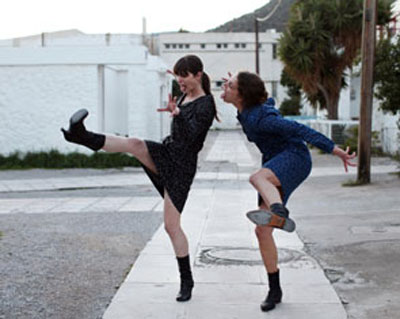
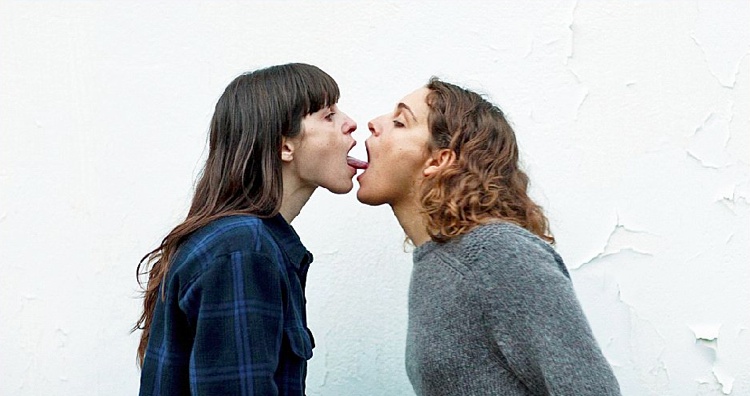
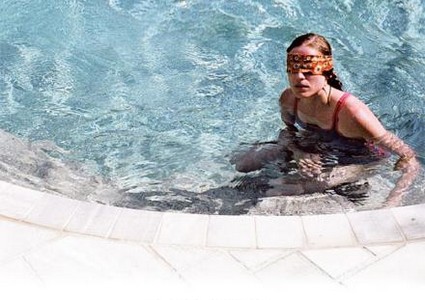
I wrote here about my expectations about Alps (2011), the new film by the writing team Lanthimos/Filippou, the first also the director. That was the set for their prior brilliant Dogtooth (2010). Am I disappointed. The dispassionate, blocking, stern framing of the characters, mostly filmed backwards, that worked so well in his previous film, take a bigger weight and that annoyed me at some point. The inverted amorcée (the objects, rather than the character, were out of focus) isolated the characters from their world (their real world, from which they're constantly trying to break off) but it eventually detached me from what that world. There are some very good scenes, were the balance between the tragic comedy and the sexual and social bizarre create an intended disturbing metaphor for a human need of becoming something otherworldly. But you don't understand what's going on until 40 minutes into the film and overall the sequences seemed pasted only, I didn't get the meaning of too many of them, I was bored most of the time and couldn't connect to neither actions nor characters to get enveloped. I'd say, aesthetically coherent (I may have not liked but that doesn't stop it from having the potential to be considered a great work for many of you) but the writing was too all over the place for me.


Today, at the IndieLisboa'12 (3/5)


First and foremost, a few words about yesterday's Lisbon Talks, as I anticipated it here, about the current state of affairs of the Portuguese cinema. Contrarily to Monday, there was no room from discussion or debate, as most of the questions, all well handled by Pedro Mexia, were too personal. The origin of the passion, academic or empiric background, what it feels to be a filmmaker for each of them and talking a little about some of their films, were the basic shots. Jorge Jácome on a very serene attitude had more to say about the context and the paradigms, certainly due to the investigation he endorsed. Filipe Melo, the funniest guy in the room, talked about how he learned by watching, how he still does and how he ever will - the greatest example was when he said he had no clue what was Pasolini's free indirect discourse but had nonetheless used the effect as a director. It was also good to hear such a young artist affirming proudly that his biggest influences are more George Romero and John Landis than properly Bergman - I love the Swedish director, I just mean it was very sincere because the Portuguese filmmaker has the tendency of trying to embellish his references, and I don't know why. Filipa Reis, very determined, had interesting points about the making of Cat Craddle (2012) and how she perceives the seventh art. Gabriel Abrantes was sharp on trying (eventually succeeding, I am not making that judgment here) to intellectualize every single thing you could say about films.

Today, in the same stance, a discussion about narratives at the light of the new media, with Manuel José Damásio (director of the Film, Video and Communication course at Universidade Lusófona), Possidónio Cachapa (writer, director, professor), Patrícia Gouveia (professor), Lewis Klahr (director) and Till Nowak (director, Delivery (2005)). For starters, I am seeing too little writers here, if we're going to talk about narratives.


 However, the major highlight is Alps (2011), which premiered last year at the Venice Film Festival. This is the first film by Yorgos Lanthimos after his worldwide success Dogtooth (2010), a bizarre story about a couple who hides and locks their kids from the streets, the society, the meaning of words and the understanding of their own body - a brilliant disturbing allegory to Plato's cave. It won the Un Certain Regard award at Cannes, two awards at Stiges and was nominated for Best Foreign Film at the Academy Awards.This one is written by the same team, himself and Efthymis Filippou, and the synopsis promises the same approach to the world, the same tone: a company which service is impersonating recently deceased people and reproduce their existence for their family and friends. Last year, IndieLisboa had Attenberg (2011), produced and stared by Lanthimos, with a resembling atmosphere, although in a (even) more ambiguous and unconventional narrative approach; this year, there's also L (2012), written by Efthymis, of the same nature. A chance we will look back in a few years from now and realize the festival assisted to the birth of one of the greatest modern cinematographies of the 21st century.

Saturday, September 10, 2011

Sokurov's "Faust" grabs the Golden Lion; "Dogtooth" writer/director gets Best Screenplay


2011 was a particularly competitive edition of the Venice Film Festival. Several films were considered potential laureates of the prestigious Golden Lion, yielding the most diverse sets of bets and predictions around the Internet. We're talking about The Idles of March (George Clooney), Tinker, Taylor, Soldier, Spy (Tomas Alfredson), Wuthering Heights (Andrea Arnold), Alps (Giorgos Lanthimos), Contagion (Steven Soderbergh), A Dangerous Method (David Cronenberg), Shame (Steve McQueen) and, although gathering very mixed reviews, Faust, by the Russian Alexandr Sokurov. The last was the favorite of the team headed by 2008 Golden Lion winner Darren Aronofsky.

The film I probably expect to see the most from this furnace, the Greek Alps, won Best Screenplay, an accomplishment I am therefore most pleased about and in which I bear my most serious expectations, having watched the prior Dogtooth. Michael Fassbender took the Coppa Volpi for Best Actor for his performance in Shame and Wuthering Heights won Best Cinematography (by Robbie Ryan).


The list of winners:

Golden Lion (Best Film)
“Faust”

Silver Lion (Best Director)
Cai Shangjun, “Ren shan ren hai (People Mountain People Sea)”

Coppa Volpi (Best Actor)
Michael Fassbender, “Shame”

Coppa Volpi (Best Actress)
Deanie Yip, “Tao Jie (A Simple Life)”

Special Jury Prize
“Terrafirma”

Osella (Best Screenplay)
“Alps” (Giorgos Lanthimos, Efthymis Filippou)

Osella (Best Cinematography)
“Wuthering Heights” (Robbie Ryan)

Marcello Mastroianni Award (Best Young Actor)
Shota Sometani, Fumi Nikaido, “Himizu di Sion Sono”

FIPRESCI Award
Best Film, Venezia 68: “Shame”
Best Film, Orizzonti and International Critics’ Week: “Two Years”

SIGNIS Award
“Faust”
Special Mention: “A Simple Life”

Premio del pubblico “Kino” – International Critics Week Award
“Là-Bas”

Label Europa Cinemas Award
“Présumé Coupable (Guilty)”

Leoncino d’Oro Agiscuola (Golden Lion Cub) Award
“Carnage”
Cinema for UNICEF Commendation: “Terraferma”

Francesco Pasinetti (SNGCI) Award
“Terraferma”
SNGCI Commendation: “L’ultimo terrestre”

Brian Award
“The Ides of March”

Queer Lion Award (Best Gay Film)
“Wilde Salome”

Arca CinemaGiovani Award
Best Film Venezia 68: “Shame”
Best Italian Film: “L’ultimo terrestre”

Biografilm Lancia Award
“Black Block”
Jury Award: “Pivano Blues – Sulla strada di Nanda”

C.I.C.T. UNESCO “Enrico Fulchignoni” Award
“Tahrir 2011″

CICAE Award
“O le tulafale (The Orator)”

CinemAvvenire Award
Best Film Venezia 68: “Shame”
Best Film – Il cerchio non è rotondo Award: “O le tulafale (The Orator):

FEDIC Award
“Io sono Li”
Special Mention: “Pasta nera”

Fondazione Mimmo Rotella Award
“L’ultimo terrestre”

Future Film Festival Digital Award
“Faust”
Special Mention: “Kotoko”

Nazareno Taddei Award
“Tao jie (A Simple Life)”

Lanterna Magica Award (CGS)
“Io sono Li”

Open Award
Marco Müller

La Navicella – Venezia Cinema Award
“Tao jie (A Simple Life)”

Lina Mangiacapre Award
“Io sono Li”
Special Mention: Fabrizio Cattani – “Maternity Blues”

Gianni Astrei pro life Award
“Tao jie (A Simple Life)”

AIF – FORFILMFEST Award
“Scialla!”

Mouse d’Oro Award
“Killer Joe”
Mouse d’Argento: “Kotoko”

UK – Italy Creative Industries Award – Best Innovative Budget
“L’arrivo di Wang”

Equal Opportunity Award
“Tao jie (A Simple Life)”

Gillo Pontecorvo Award – Arcobaleno Latino
Gaetano Blandini, Nicola Borrelli, Gian Marco Committeri, Roberto Lo Surdo, Mario La Torre

Christopher D. Smithers Foundation Special Award
“Himizu”

Interfilm Award for Promoting Interreligious Dialogue
“Girimunho (Swirl)”

Vittorio Veneto Film Festival Award
“Scialla!”
Special Mention: “Eva”


Sunday, September 4, 2011

Lanthimos with new Greek masterpiece; read also for Al Pacino and Steve McQueen's premieres


Alps (Giorgos Lanthimos)


"Alps, Yorgos Lanthimos’s caustic fourth feature, is as bizarre and elliptical as Dogtooth and Kinetta, and like its offbeat predecessors has an inexplicable power to draw the viewer into its hermetic web of inhuman relationships. This fine example of cinema of the absurd focuses on a bizarre club whose members are paid by family of the deceased to “stand in” for their loved ones, living in their homes and reciting the dead person’s words by rote. Given the emotional distance the director puts between his characters and the audience, Alps is a strictly intellectual game that will leave most viewers in the cold. After festival audiences puzzle over it, it should eke out highly selected art house patrons looking for something different." (Debora Young, The Hollywood Reporter)

"Lanthimos continues to prove himself a supremely controlled, disciplined filmmaker: his use of focus alone could form the basis of a film school class, and it’s always interesting to note what he doesn’t show, frequently cutting off or obscuring faces and relying on body language. “Alps” has proven Lanthimos to be one of the most fascinating filmmakers anywhere right now, and, while there’s no immediate news on when it’ll hit on the U.S., or anywhere outside Greece, we’re confident it’ll be one of the most talked-about films of the next year: with so much to talk about, how could it not be?" (oliver Lyttelton, IndieWire, A).

"With 2009's acclaimed Dogtooth, Lanthimos earned a reputation as the laughing mortician of contemporary Greek culture. This splendidly icy, opaque picture goes further still, showing a world nudged off its axis and an emotional topography where the signposts are backwards and the satnav scrambled. Lanthimos has a habit of shooting his characters from behind, or half out of frame, keeping them mysterious and unknowable, while their listless reading of rehearsed lines walks the line between comical and creepy." (Xan Brooks, The Guardian, ****)

"Lanthimos again displays an impressive formal command that extends from the screenplay to the pic's technical prowess. Widescreen, shallow-focus lensing is beautifully composed and pays special attention to the faces of the actors, who again inhabit a space somewhere between theatrical and natural, befitting characters who are often involved in role play themselves. Further craft contributions are all topnotch." (Boyd Van Hoeij, Variety

"Doubling down on its predecessor’s polarizing absurdist humor and chilly formal grace, “Alps” applies those virtues to a more diffuse, ensemble-driven structure that is in no hurry to reveal its rich thematic adhesives of doubling and substitution. It’d be rash to call it a better film than “Dogtooth,” but it is, in the relative scheme of these things, a bigger one, and exciting evidence of restless formal development on the part of its director. (Lanthimos’ regular DP Thimios Bakatakis’ camerawork is as calculated and sparing with space and depth as before, but more active and richer in palette.)" (Guy Lodge, In Contention)


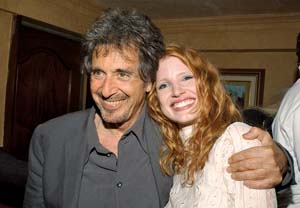
Wilde Salome (Al Pacino)


"More personal and obsessive than his 1996 Shakespeare documentary Looking for Richard, with which it has much in common, Al Pacino’s long-in-the-making Wilde Salome is both an intriguing exploration of Oscar Wilde’s play about the destructive use of sexuality and an intimate self-portrait of the actor/director as he over-extends himself into performing Salome on stage and shooting a film -- this film -- at the same time. Playing mostly himself but also King Herod and, in one scene, Oscar Wilde, with whom he toys with identifying, Pacino is the creator and real subject of the work. For all its esotericism, the film can count on the star appeal of veteran Pacino and rising star Jessica Chastain, fascinating in the role of Salome, to take wing with specialized auds following its Venice bow out of competition." (Debora Young, The Hollywood Reporter

"Al Pacino has long been drawn to "problem" classics: "Richard III," "The Merchant of Venice" and now "Salome." It's not so clear the plays are drawn to him. Despite frequent declarations of his fixation with "Salome," Pacino as both helmer and star fails to make clear the source of this obsession; nor does he demonstrate a particularly focused understanding of the play or Oscar Wilde. Auds ignorant of either one will find information to sip on rather than chew, though Pacino's name guarantees limited arthouse exposure followed by rotation on culture channels." (Jay Weisserberg, Variety)


Shame (Steve McQueen)

"Still, what a gifted film-maker McQueen is turning out to be. He composes every frame exquisitely, from the tableau-like opening image of Fassbender sprawled in bed looking dead-eyed. There’s an impressive a long tracking shot as Brandon runs the length of several city blocks, using the exertion to quell his inner rage. And then there’s a key scene in a club, where Sissy sings New York, New York from beginning to end. It’s usually performed in triumphalist mode, but Mulligan, a gifted chanteuse, turns it into a slow, mournful blues. For once, Brandon shows emotion, wiping away a tear; the song becomes a comment on the life that imprisons him." (David Gritten, The Telegraph)

"Few filmmakers have plumbed the soul-churning depths of sexual addiction as fearlessly as British director Steve McQueen has in "Shame." A mesmerizing companion piece to his 2008 debut, "Hunger," this more approachable but equally uncompromising drama likewise fixes its gaze on the uses and abuses of the human body, as Michael Fassbender again strips himself down, in every way an actor can, for McQueen's rigorous but humane interrogation. Confrontational subject matter and matter-of-fact explicitness will position the film at the higher end of the specialty market, but it's certain to arouse critical acclaim and smart-audience interest wherever it's shown." (Justin Chang, Variety)

"Driven by a brilliant, ferocious performance by Michael Fassbender, Shame is a real walk on the wild side, a scorching look at a case of sexual addiction that’s as all-encompassing as a craving for drugs. Steve McQueen’s second feature, after his exceptional debut with Hunger in 2008, may ultimately prove too psychologically pat in confronting its subject’s problem, but its dramatic and stylistic prowess provides a cinematic jolt that is bracing to experience. This sexually raw film will stir considerable excitement among critics and serious audiences, making it an attractive proposition for an enterprising distributor in the wake of festival play in Venice, Telluride, Toronto and New York." (Todd McCarthy, The Hollywood Reporter)


Wednesday, May 11, 2011

IndieLisboa'11: Attenberg (cobertura dia 6)

Desde que o filme abre que são óbvias as semelhanças estéticas com a belíssima anterior obra vinda da Grécia, Dogtooth. As cores claras e desgastadas, hospitalares, na verdade; a forma como a câmara espera por todas as acções e todos os movimentos e diálogos bizarros e estranhos dos personagens, sempre a uma distância mecânica de um plano americano (conferindo maior significação às aproximações aos rostos, planos bem bonitos); os enquadramentos autistas, planos, de uma realidade fechada e a duas dimensões. São os tons e a atmosfera do antecedente filme, realizador por Yorgos Lanthimos, que protagoniza aqui a figura do engenheiro.

Nestes termos, é muito interessante e adivinha, ou confirma, depende do que se seguirá e do ponto de vista com que se olha, a nova tendência do cinema grego, aqui pela mão de Athina Rachel Tsangari. Porém, narrativa e tematicamente não me deixou propriamente satisfeito e creio que é aqui que fica bastante aquém do outro filme, mesmo percorrendo a mesma lógica metafórica. Trata-se aqui a descoberta ou emancipação sexual de Marina, que praticamente vem de um ovo de ignorância e não sabe sequer beijar - aliás, deste perturbador plano inicial e ponto instigador da história, catapultam-se uma série de momentos, como afirmei, bizarros, tão realistas quanto surreais (e aí, por exemplo, a menção para a "árvore de pénis"). O contraponto é a sua amiga Bella, que retratando uma passividade semelhante, esconde uma leviandade contrastante ("(...) come toda a gente." - incluindo o pai de Marina).

Peca, parece-me, por certa falta de rumo. Terá uma estrada, mas não um caminho. Senti pouca utilidade em muitas das sequências a que assisti e tive dificuldade em que articular um desenvolver de um tema sem interrupções forçadas de tentativas de extra-realismo. Por vezes, socorre-se demasiado da simbologia, ora do gesto ora da palavra, e a ligação das cenas torna-se um pouco arty.

O filme esteve nomeado para o Leão de Ouro em Veneza e a actriz principal Ariane Labed venceu a Copa Volpi, destinada às melhores performances - de facto, gostei. De qualquer forma, um caso a analisar com mais detalhe, no futuro.

Saturday, November 27, 2010

Dogtooth / Canino (2009)


"Quando o teu canino direito cair, podes sair de casa em segurança. Ou o esquerdo. Não faz diferença.". É em pleno açoite ao patinho mais feio da Europa dos 27, por parte dos mercados internacionais e do próprio FMI, que surge um dos melhores filmes não só do ano mas dos últimos anos.

Canino, do jovem realizador Yorgos Lanthimos, é um estudo filosófico, sociológico e antropológico, mangificamente bem conduzido, sobre a condição humana: a eterna dicotomia entre a prisão física, intelectual e sentimental e os puros instintos de as combater, a aflição da sobrevivência. Algo inevitável e inafastável - a propulsora curiosidade e sede de conhecimento do Homem, que o tem feito sair do escuro e das trevas, século após século. Um hino a algumas das reflexões mais profundas que a nossa espécie alguma vez fez, desde a originária, magoada e revoltada Alegoria da Caverna, de Platão, à bicuda e cáustica intervenção iluminista de Kant.

A câmara surge, desde início, tão autista como as personagens - os planos em que apenas as enquadramos da cintura para baixo, com as suas pernas e pés em foco, os enquadramentos das suas expressões de forma desajustada, irregular, cortada. A própria é, além disso, distante. São muito pouco utilizadas as grandes escalas e seguimos toda a acção como se uma barreira nos separasse, quem sabe a mesma barreira que circunscreve o espaço do filme.

O argumento é brilhante, com uma narrativa inteligente e sagaz, que na passividade inconsciente das personagens em combater a sua condição, cria uma progressiva evolução em direcção à questionabilidade, ao arriscar, ao espreitar, a um soltar de amarras e aflitivas correias. Várias pistas vão sendo deixadas ao longo dos noventa minutos sobre o estado momentâneo daquela família e dos cliques de nova fase que ameaçam surgir - como a associação que fazemos entre uma cena inicial, em que os filhos discutem sobre quem ficará com o avião se este cair, e uma cena mais tardia, em que a mãe deixa cair um avião de brincar, numa diferença que as "crianças" não sabem distinguir. Ou uma primeira fase, em que uma das filhas apenas espreita para dentro do quarto enquanto a mãe fala ao telefone, para uma segunda fase em que discute isso com a irmã, para uma terceira fase em que ela própria avança clandestina na direcção do misterioso objecto.


Uma jornada que segue a vida de três filhos já adultos que sofrem uma educação condicionada (a caverna), que lhes tolda o significado da vida: o significado do berço (dar à luz é um instrumento de manipulação e estratégia); o significado das palavras (enfraquece a essência linguística da comunicabilidade); o significado do corpo (do amor, do sexo, do gesto, do movimento); o significado da moral (o incesto, o paralelismo com os cães, em sons e acções); o significado dos sentimentos (da liberdade, da afecção).

Um minimalismo luminoso e esbranquiçado, silencioso e enclausurante, que nos transporta para um final cuja continuação não sabemos se queremos ver, já que daí resultará a restrição perpétua, castigo da revolução, ou, enfim, a luz e harmonia no alcance de novas realidades, como o admirável voo do avião que nunca cai.